
New Build Garden Drainage Problems Explained
Standing water, boggy turf and poor falls can make a new build garden difficult to use. Learn what may cause drainage problems, what evidence to collect and when to report the issue.
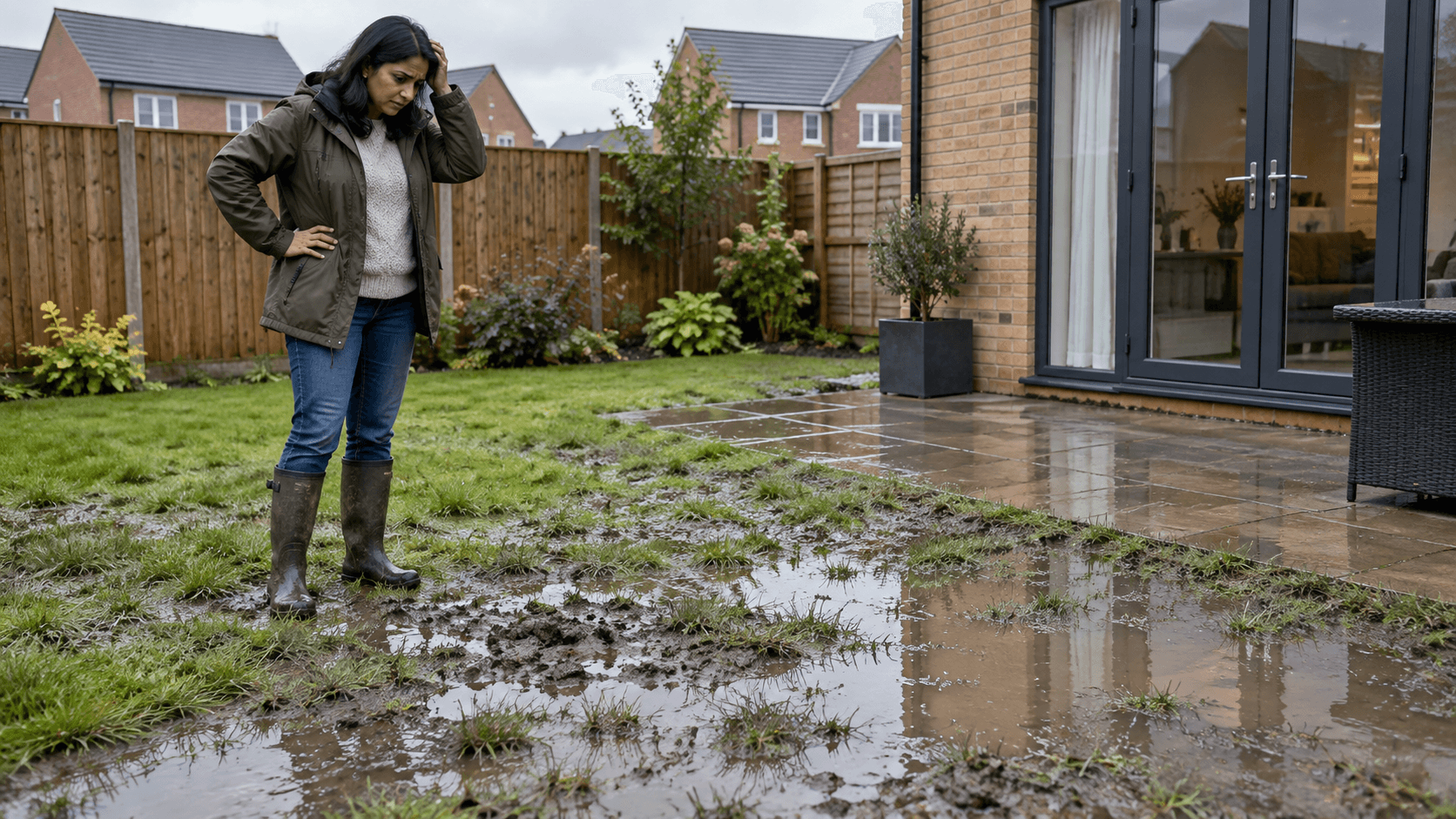
A new build garden can look wet and untidy while a development is still being completed, but persistent standing water after ordinary rainfall may indicate that the garden is not draining effectively.
Possible causes range from compacted soil and poor landscaping to incorrect falls, blocked drainage or site-specific ground conditions.
Before digging trenches or installing your own drainage, document the original problem and report it to the developer. Altering the garden too early can make it harder to establish what was originally provided.
How wet is too wet for a new build garden?
A garden will not remain perfectly dry in all weather.
Heavy rain, clay soils and winter conditions can leave ground saturated temporarily.
The concern is more about persistent or repeated problems such as:
standing water that remains long after surrounding areas drain
boggy ground during normal weather
turf repeatedly dying because it stays saturated
water gathering beside the house
water flowing towards doors or air bricks
paths or patios directing water towards the building
repeated flooding from downpipes or gullies
foul-water or sewage symptoms
Photographs taken after different rainfall events can help show the pattern.
Why do new build gardens become waterlogged?
Several factors can contribute.
Compacted soil
Construction traffic and machinery can compact soil.
Compaction reduces the spaces through which water would normally move.
A thin layer of topsoil over heavily compacted subsoil may look acceptable initially but drain poorly in wet conditions.
Heavy natural soil
Some sites naturally contain clay or other low-permeability soils.
That does not automatically mean the garden is defective, but the design and landscaping need to take local conditions into account.
Poor levels or falls
If the garden surface directs water into low spots or towards the home, puddling can become concentrated.
Pay particular attention to areas beside external walls, doors and patios.
Downpipes and surface water
A blocked, disconnected or poorly arranged downpipe can discharge large volumes of rainwater into one part of the garden.
Check visible guttering and downpipes from ground level.
NHBC's homeowner checklist specifically suggests checking external pipes, visible leaks, blockages and manhole covers.
Drainage system problems
Where a site uses drains, soakaways or other surface-water systems, defects or blockages can affect how water is managed.
Do not open or enter drainage systems yourself.
If there is backing-up, foul odour or sewage, report it promptly.
Should the garden slope away from the house?
The key issue is that surface water should not be directed in a way that causes problems for the building.
Look at the relationship between:
lawn
patio
paths
external doors
air bricks or vents
damp-proof course
neighbouring gardens
If water repeatedly pools against the wall or crosses a threshold, photograph it and report it.
Do not raise soil or paving levels against the house without professional advice, as this can create moisture problems.
Is standing water automatically a defect?
No.
A photograph taken immediately after exceptional rain may not prove there is a construction defect.
The useful evidence is persistence and repetition.
Record:
date
recent weather
how long water remains
depth where practical
exact location
whether the same area floods repeatedly
whether neighbouring plots behave differently
whether water approaches the home
A short video can help show water flowing in the wrong direction.
Check the reservation and landscaping specification
Find out what the developer actually agreed to provide.
Was the garden sold with:
turf
topsoil
planting
drainage
patio
paths
fencing
retaining walls
If landscaping was included, compare the finished garden with the specification.
Our new build viewing guide explains why buyers should check external areas before reservation.
Should you dig up the garden yourself?
Not before reporting the problem and understanding what lies beneath.
New build gardens can contain:
drainage
utility services
ducts
inspection chambers
retaining structures
Excavating without knowing their location can cause damage or create safety risks.
If you want independent advice, use a suitably qualified professional.
What should the developer investigate?
Depending on the problem, useful questions include:
Are finished ground levels correct?
Is there excessive compaction?
Is the topsoil depth consistent with the specification?
Are downpipes connected correctly?
Are gullies blocked?
Is the surface-water drainage functioning?
Was a land-drainage system specified?
Are neighbouring plots discharging water into mine?
Are retaining walls or slopes influencing runoff?
The correct solution depends on the cause.
Simply adding more topsoil may not fix underlying drainage.
Can a snagging survey identify garden drainage problems?
A snagging inspector can document visible external defects and may identify signs that further investigation is required.
The scope varies by company.
If garden drainage is a major concern, ask before booking whether external levels and drainage observations are included.
Read is a snagging survey worth it? and browse the UK snagging company directory.
What if water is entering the house?
Treat this more urgently than a wet lawn.
Water entering around doors, walls or other openings may cause damage and should be reported promptly.
Photograph the entry point and the external conditions.
If there is electrical equipment affected by water, do not handle it unnecessarily; seek appropriate professional help.
What if the developer does not fix the drainage?
Use the developer's after-sales process and then formal complaints procedure if the issue stalls.
Keep evidence before and after attempted repairs.
Our guide to what happens if a developer won't fix snags explains escalation options.
Check the warranty documents too. Whether garden, drainage or consequential damage is covered depends on the policy and the part of the property involved.
Can you claim through the warranty?
Potentially, but do not assume every waterlogged lawn is a warranty claim.
Warranty definitions and cover differ.
Some policies cover particular drainage systems or defects while excluding landscaping or maintenance issues.
Read your policy and the new build warranty guide.
What about garden drainage before buying?
If you are viewing a completed plot, look at the garden after wet weather if possible.
Check:
low points
slope towards the house
visible drains
downpipes
retaining walls
neighbouring ground levels
condition of turf
standing water
Also ask how the development's surface water is managed.
Research the developer and local development
National customer satisfaction data will not tell you whether one garden drains properly.
However, local review themes can reveal repeated comments about landscaping, drainage and remedial work on a specific site.
Research the housebuilder through the developer directory and compare wider satisfaction in the developer rankings.
The bottom line
A new build garden can be temporarily wet without there being a defect, but persistent waterlogging deserves investigation.
Record the conditions before changing the garden, check levels and visible drainage, report repeated problems and ask the developer to explain the intended drainage design.
The right repair depends on the cause, so avoid spending money on a generic drainage solution until you understand why the water is collecting.