
New Build Soundproofing Problems: What Buyers Should Know
Hearing noise in a new build does not automatically mean the home fails acoustic standards. Learn how sound insulation works, what to document and when specialist testing may be appropriate.
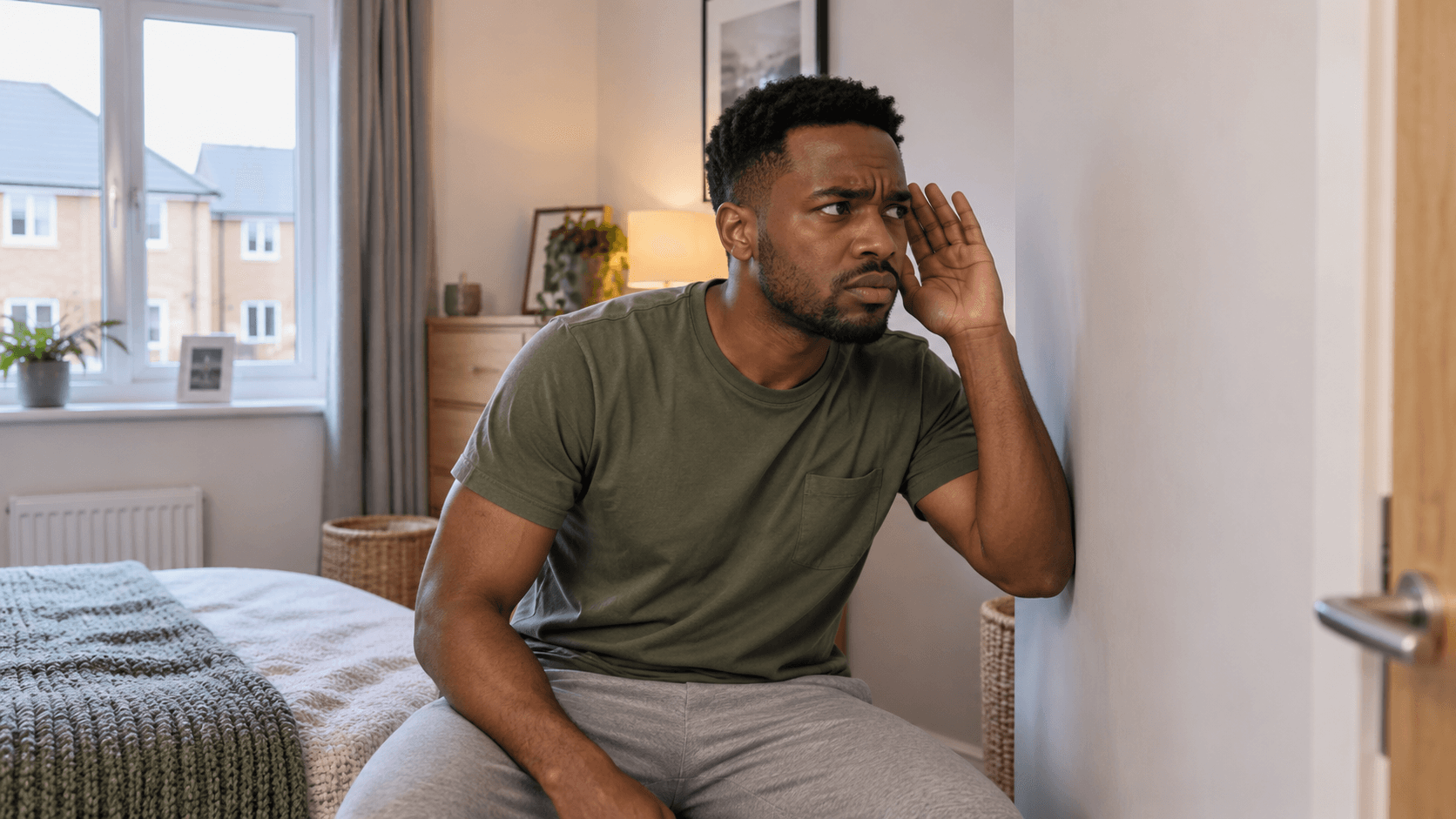
A newly built home is not expected to be silent. You will hear some everyday noise from inside the property, outside the building and, in attached homes, neighbouring dwellings.
The question is whether the level and type of noise are reasonable for the construction and whether the home meets the acoustic requirements that apply to it.
Sound problems are difficult to diagnose by impression alone. If you believe noise transmission is excessive, record the circumstances first and then consider whether technical assessment is needed.
What do Building Regulations say about soundproofing?
In England, Approved Document E provides guidance on the Building Regulations requirements for resistance to the passage of sound.
For dwelling-houses and flats, the regulations require reasonable resistance to sound from other parts of the same building and adjoining buildings.
They also contain requirements relating to sound insulation within certain parts of a home.
Building standards differ across Scotland, Wales and Northern Ireland, so check the rules applying to the property you are researching.
Does passing Building Regulations mean you will hear nothing?
No.
Building Regulations establish minimum performance requirements. They do not promise complete acoustic isolation.
You may still hear:
doors closing
footsteps
plumbing
voices at some level
television or music
traffic
children playing
external construction noise
Whether a particular level is acceptable or compliant cannot reliably be decided from a description online.
What types of noise travel through new homes?
Understanding the noise type can help when reporting it.
Airborne noise
Sound travelling through the air, such as:
speech
television
music
barking
Impact noise
Sound created by physical impact, such as:
footsteps
dropped objects
furniture movement
Impact noise is particularly relevant in flats and stacked accommodation.
Structure-borne or service noise
Vibration and noise can also travel through:
pipework
ventilation systems
pumps
walls
floors
structural connections
Identifying which type you hear can help narrow the investigation.
What is flanking transmission?
Sound does not always travel directly through the wall separating two homes.
It can bypass the main separating element through adjoining floors, walls, ceilings, service routes or construction junctions. This is known as flanking transmission.
That is one reason simply adding a decorative acoustic panel to your side of a wall may not solve the actual problem.
What should you check before reporting a soundproofing defect?
Write down:
which room you are in
where the noise appears to come from
whether it is airborne or impact noise
time of day
duration
how often it occurs
whether doors or windows are open
whether ventilation equipment is running
whether the sound comes from inside or outside the building
Avoid recording private conversations in a way that could create privacy issues. The aim is to document the nature and timing of the disturbance, not capture neighbours' personal information.
Can you test sound insulation yourself?
Phone apps and casual noise readings are not a substitute for formal acoustic testing.
A phone microphone is not calibrated for building-compliance testing, and the result can be affected by the device, room and measurement method.
If compliance is genuinely in question, an appropriately qualified acoustic professional can advise on testing.
Should you ask the developer for acoustic test results?
You can ask how the development demonstrated compliance with the relevant acoustic requirements.
Depending on the construction and regulatory route, different evidence may exist.
Your conveyancer or building professional may also be able to help identify relevant documentation.
Do not assume that the absence of a test certificate in your homeowner pack proves the property is non-compliant.
Could gaps or unfinished work make noise worse?
Potentially.
Sound performance depends on the whole construction.
Problems around:
service penetrations
sockets
junctions
ceilings
floors
poorly sealed gaps
incorrectly installed components
can affect acoustic performance.
Do not open walls or remove fire-stopping or acoustic materials to investigate yourself.
An intrusive investigation should be planned by an appropriate professional.
What about noise through windows and vents?
External noise can enter through the building facade.
Windows, glazing, seals and ventilation all affect what you hear.
Ventilation is important for indoor air quality, so permanently blocking trickle vents or mechanical ventilation is not a safe general solution to noise.
If outside noise appears excessive, ask whether acoustic ventilation or other measures were part of the design.
Our new build condensation and mould guide explains why ventilation should not simply be disabled.
What if you can clearly hear your neighbours?
Do not jump straight from "I can hear voices" to "the wall fails Building Regulations".
First document:
frequency
volume impression
room
time
type of sound
whether it is coming through a wall, floor or another route
Then report the concern to the developer.
If it remains disputed, a qualified acoustic consultant can assess the construction and advise whether testing is justified.
Is soundproofing a snag?
It can be a build-quality concern, but it may be more technical than a routine cosmetic snag.
A snagging inspector may identify visible gaps or obvious workmanship issues. Formal acoustic performance is a specialist area.
When booking an inspection, ask exactly what the inspector covers.
Read is a snagging survey worth it? or use the snagging company directory.
What should you tell the developer?
Keep the report factual.
For example:
"Impact noise from the flat above is regularly audible in the main bedroom between approximately 7am and 8am and appears to transmit through the ceiling."
That is more useful than:
"The soundproofing is terrible."
Ask:
whether the issue will be inspected
what construction was used
what compliance route applied
whether previous acoustic test information exists
whether a specialist inspection is required
What if the developer says the noise is normal?
Ask how it reached that conclusion.
If the answer is based only on a short site visit and you remain concerned, independent acoustic advice may be appropriate.
The question is not whether one person personally finds the noise annoying. It is whether the construction performs as required and whether there is a workmanship defect.
What if the developer won't investigate?
Use the after-sales process and formal complaints route.
For eligible homes covered by the New Homes Quality Code, developers must have an after-sales service and complaints procedure.
Read what happens if a developer won't fix snags.
Keep all technical reports and correspondence.
Can you improve soundproofing yourself?
There are aftermarket products and construction solutions, but do not modify the separating wall, ceiling, ventilation or fire-protection systems without understanding the consequences.
Alterations can affect:
fire safety
ventilation
electrical services
warranty cover
future investigations
Identify the source before paying for a generic soundproofing solution.
Check noise when viewing a new build
If you are buying a completed home, spend time in several rooms without music or sales-office conversation.
Listen for:
traffic
plant or pumps
neighbouring homes
communal corridors
lifts
nearby commercial uses
construction on future phases
Our new build viewing guide covers other practical checks before reservation.
Research developer aftercare
Acoustic complaints can take investigation and coordination between trades.
Before buying, look at third-party review themes around communication and remedial work.
Use the developer directory and new build developer rankings as part of your research.
The bottom line
Hearing some noise in an attached new build does not automatically mean the sound insulation is defective.
If noise seems unusually intrusive, document the type and location, report it clearly and avoid trying to prove compliance with a phone app.
Where the issue remains significant or disputed, an appropriately qualified acoustic professional can provide a much stronger basis for deciding whether there is a construction problem and what should happen next.